


The EHR Did What It Was Designed to Do. Healthcare Operations Changed Around It.
Over the last decade, hospitals, specialty clinics, behavioral health providers, home healthcare agencies, and senior care organizations invested millions in modern EHR platforms. Clinical documentation improved. Regulatory requirements became easier to manage. Patient records became more accessible.
Yet many healthcare executives share a similar frustration:
“Why does so much work still happen outside the EHR?”
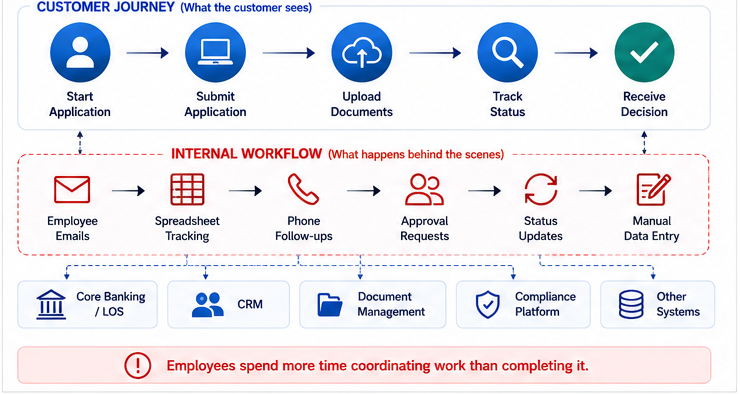
- Patient access teams maintain spreadsheets to track referrals.
- Revenue cycle staff manually follow up on missing documentation.
- Care coordinators spend hours calling departments for status updates.
- Clinical teams switch between multiple applications throughout the day.
- Managers rely on email threads to understand operational bottlenecks.
The problem isn’t that the EHR failed.
The problem is that healthcare delivery has become significantly more interconnected, while many operational workflows remain fragmented.
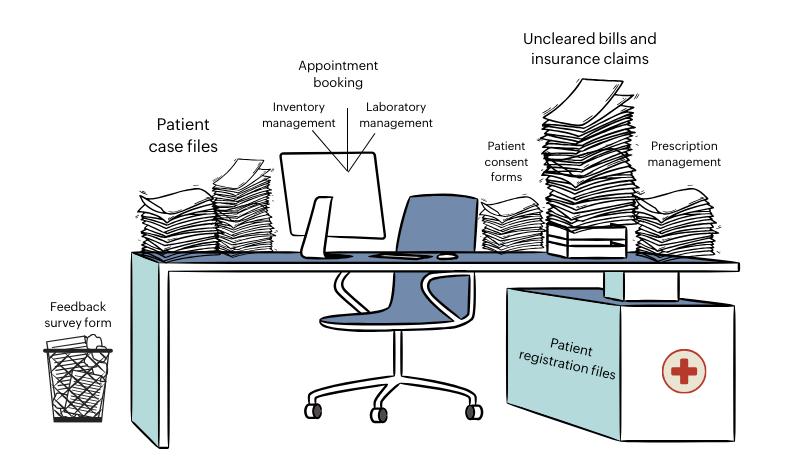
The Hidden Cost of Fragmented Operations
Mid Sized Healthcare organizations often face a unique challenge.
They are large enough to manage thousands of patient interactions each month, yet small enough that many operational processes still depend on manual coordination between teams.
Over time, these workarounds become embedded into daily operations:
- Staff copying information between systems
- Teams maintaining separate spreadsheets
- Multiple phone calls to verify patient readiness
- Manual referral tracking
- Re-entering demographic or insurance information
- Chasing unsigned documentation
- Emailing reports instead of accessing shared operational dashboards
Individually, these tasks may take only a few minutes.
Collectively, they consume hundreds of staff hours every week.
More importantly, they create delays that directly affect patient experience, employee satisfaction, and financial performance.

Why Administrative Work Has Become the New Capacity Constraint
Most healthcare organizations no longer struggle because clinicians lack expertise.
They struggle because clinicians, nurses, patient access teams, revenue cycle staff, and care coordinators spend too much time coordinating work instead of completing it.
Consider a typical patient journey.
- A referral arrives.
- Insurance eligibility must be verified.
- Prior authorization may be required.
- Appointments need scheduling.
- Clinical documentation must be complete.
- Lab results must be available.
- Billing requirements need validation.
None of these tasks are particularly complex.
What makes them difficult is that they often span multiple systems, departments, and handoffs.
Every handoff introduces opportunities for delay, duplicate work, or missed information.
The result is operational friction that rarely appears in executive dashboards but affects nearly every patient encounter.
AI Is Becoming Most Valuable Between Systems—Not Inside Them
Much of the public discussion around AI has focused on documentation assistants, clinical decision support, and conversational interfaces.These technologies have value.
However, many mid-sized healthcare organizations are finding that their fastest operational gains come from applying AI between
existing systems rather than replacing them.
Examples include:
Intelligent Referral Management
AI can review incoming referrals, identify missing information, prioritize urgent cases, and automatically route requests to the appropriate teams.
Patient Access Automation
Rather than requiring staff to manually monitor multiple work queues, AI can identify incomplete registrations, flag missing insurance information, and recommend the next action before appointments are delayed.
Documentation Readiness
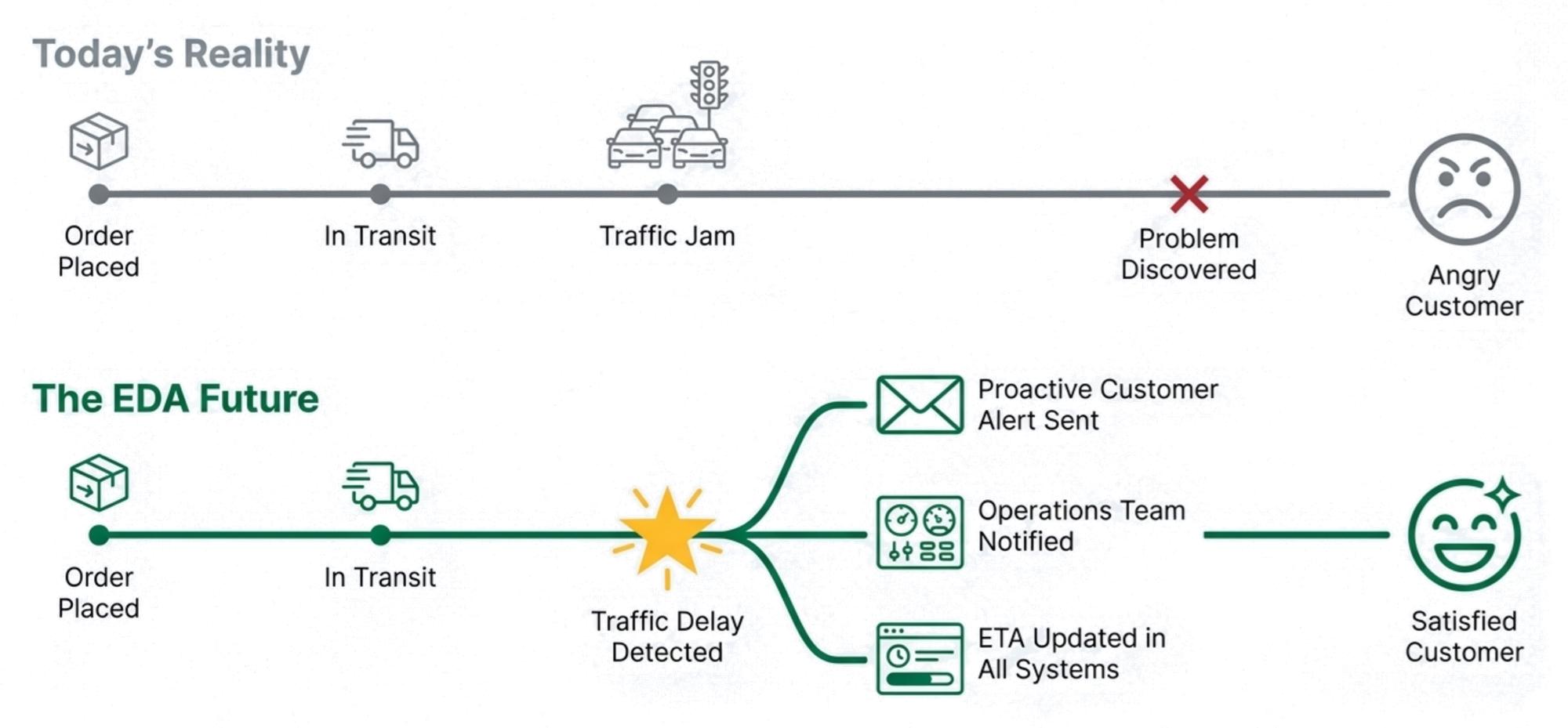
Instead of discovering incomplete documentation days later, AI can identify missing signatures, required clinical elements, or coding issues while encounters are still active.
Revenue Cycle Support
Claims that are likely to encounter issues can be identified earlier, allowing teams to resolve documentation or eligibility problems before submission.
Operational Visibility
Executives no longer need to wait for weekly reports.
AI can continuously monitor operational workflows and highlight emerging bottlenecks before they affect patient throughput.
Notice what these examples have in common. They don’t replace the EHR. They make the workflows around the EHR more efficient.
Integration Is Becoming More Valuable Than Additional Software
A common misconception is that digital transformation requires purchasing another enterprise platform.
For many organizations, the opposite is true.
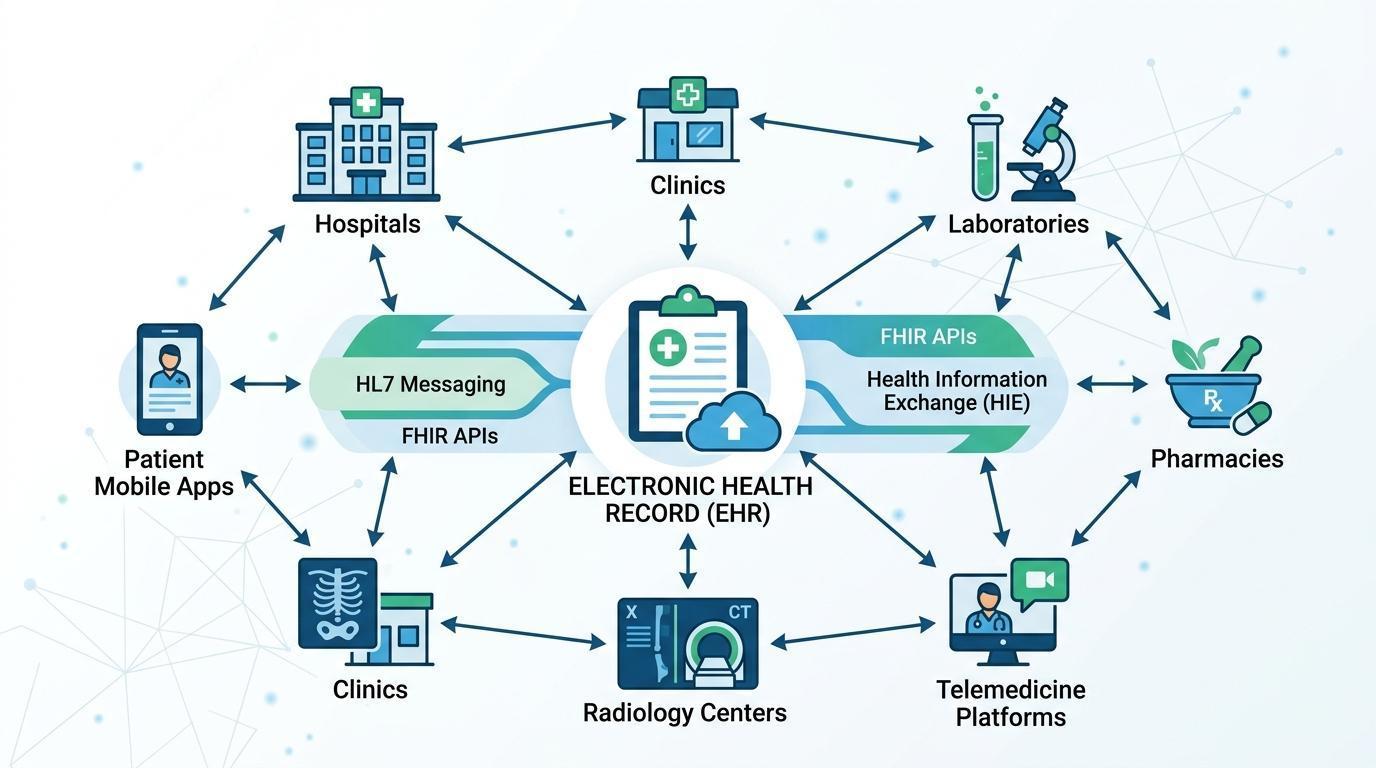
The greater opportunity lies in helping following existing systems communicate more effectively.
- Scheduling.
- EHR.
- Laboratory systems.
- Imaging.
- Billing.
- CRM.
- Patient engagement platforms.
- Contact centers.
- Document management.
When information moves seamlessly between these systems, staff spend less time searching, verifying, and re-entering data.
Healthcare leaders increasingly recognize that operational improvement often comes from connecting existing investments rather than replacing them.
AI Without Governance Creates New Risks
As organizations expand AI adoption, another challenge becomes increasingly important.
“Governance“
Healthcare leaders are asking practical questions:
- Why did the AI recommend this action?
- Can staff verify its reasoning?
- Is patient information handled appropriately?
- How are automated decisions monitored?
- What happens when confidence is low?
- Who remains accountable?
Responsible AI is no longer a compliance exercise. It is becoming a prerequisite for operational trust.
The organizations seeing the greatest value from AI are those that treat it as an extension of existing workflows—with clear oversight, transparent decision-making, and human review where appropriate.

What Executive Teams Should Evaluate Next
Instead of asking, “Where can we use AI?” consider asking:
- Which operational workflows require the most manual coordination?
- Where do staff spend time searching for information?
- Which departments rely on spreadsheets outside core systems?
- Where are delays introduced between teams?
- Which repetitive administrative tasks occur thousands of times each month?
- Which decisions depend on information scattered across multiple applications?
- Where does operational visibility break down before executives become aware of problems?
These questions often reveal opportunities with measurable returns and relatively low implementation risk.
Digital Transformation Is Entering a New Phase
The first phase of healthcare digitization focused on implementing core clinical systems. The next phase is about making those systems work together more intelligently.
For many mid-sized healthcare organizations, success won’t be defined by adopting the latest AI model or replacing existing technology. It will come from reducing friction across everyday workflows, improving visibility into operations, and enabling staff to spend less time coordinating work and more time delivering care.
Organizations that approach AI as part of a broader strategy for integration, automation, and governance are likely to realize more sustainable gains than those pursuing isolated pilots.
Because in 2026, the greatest opportunity isn’t replacing your EHR. It’s removing the operational friction that surrounds it.
Executive Takeaway
Most healthcare organizations don’t have a technology shortage—they have a workflow visibility problem.
The next wave of operational improvement will come from connecting existing systems, automating repetitive administrative work, and applying governed AI where it can meaningfully reduce delays, improve coordination, and help teams focus on patient care rather than process.
Quick Question Worth Asking
If your teams are still relying on manual coordination, spreadsheets, emails, or multiple systems to move patients through their journey, it may be worth taking a closer look—not at your EHR, but at the workflows surrounding it.
We’re offering a complimentary Healthcare Workflow & AI Opportunity Assessment for a limited number of healthcare organizations. It’s a collaborative review of your current operational workflows to identify where AI, automation, and better system integration could reduce administrative burden, improve visibility, and streamline day-to-day operations—without replacing your existing EHR or core platforms.
Whether you decide to act on the findings or not, you’ll leave with a clearer understanding of where the greatest opportunities for improvement may exist.
Contact Netforth Software Solutions
Contact us